5 Household Patterns That Can Raise Everyone’s Risk Of Tooth Decay
You brush your child’s teeth, buy the toothpaste, try to limit candy, and still someone ends up with a cavity. That can feel frustrating fast, especially when the problem does not seem to come from one obvious bad habit. In many homes, tooth decay grows out of small routines that seem harmless on their own but add up across the week, which is why visiting a family dentist in Richmond, IN can help catch issues early.
If one person in the house keeps getting cavities, there is a good chance the whole family has a few habits working against them. The short version is simple. Frequent sugar, constant snacking, skipped night brushing, sharing saliva through cups or utensils, and putting off dental visits can all raise the risk. A family tooth decay risk is often less about one treat and more about the pattern around it.
Frequent sugar exposure keeps teeth under steady attack
Most people think cavities come from eating too much sugar. The fuller truth is that teeth struggle when sugar shows up often. According to the CDC’s overview of cavities and tooth decay, bacteria in the mouth feed on sugars and make acids that wear down tooth enamel. That acid attack starts again every time sugary food or drinks come around.
This is why a few sips of juice over an hour can be rougher on teeth than drinking it with a meal and moving on. The same goes for sports drinks, sweet coffee, flavored milk, gummy snacks, and even frequent crackers or chips that break down into sugars. In a busy house, grazing can become normal. A snack in the car, a treat after school, a bedtime cup, a soda with dinner. Teeth never get much recovery time.
Snacking all day leaves little time for enamel to recover
You may already know sugar matters, but timing matters too. Teeth need breaks between eating episodes so saliva can help wash away food particles and neutralize acids. The National Institute of Dental and Craniofacial Research explains the tooth decay process clearly. Repeated acid exposure weakens enamel, and once that cycle keeps going, a cavity can form.
This is where family life gets tricky. Kids often snack because they are growing, adults snack because they are tired, and everyone grabs what is easy. If the kitchen stays open all evening, mouths stay busy all evening too. That does not mean your home has to run like a boot camp. It means setting clearer meal and snack windows can lower the pressure on everyone’s teeth.
Nighttime brushing is the habit families skip when they are worn out
Even homes with solid morning routines often fall apart at night. That makes sense. Bedtime is when people are done, not when they are at their best. A child falls asleep on the couch. A parent forgets after cleaning the kitchen. A teen says they already brushed at school after practice. These are ordinary moments, but they matter because saliva flow drops during sleep, so food debris and plaque sit longer on teeth.
Brushing with fluoride toothpaste before bed is one of the strongest ways to interrupt household habits that cause cavities. If someone drinks milk, juice, or sweet tea after brushing, the benefit drops. If younger children are doing a quick, unsupervised brush, they may miss the gumline and back teeth where decay often starts.
Sharing utensils and cups can spread cavity causing bacteria
Many families do this without thinking. One sip from your child’s cup, testing food with the same spoon, cleaning a pacifier with your mouth. It feels normal because it is normal in daily life. It can also pass bacteria from one mouth to another. MedlinePlus notes that the risk of tooth decay is linked to bacteria, diet, and oral hygiene, among other factors, in its guide to preventing tooth decay.
If an adult in the home has untreated decay or heavy plaque buildup, those bacteria can circulate more easily through shared items. This does not mean you need to panic over one accidental sip. It means reducing routine saliva sharing is one more practical way to protect younger teeth.
Delayed checkups turn small problems into expensive ones
Families often postpone dental visits for the same reasons they postpone everything else. Scheduling is hard. Costs add up. No one has time for one more appointment. The trouble is that early decay may not hurt at all. By the time someone complains about sensitivity or pain, the treatment may be bigger and more expensive.
A family dentist can often spot weak enamel, deep grooves, dry mouth, poor brushing technique, and diet patterns before they turn into fillings or infections. That is one reason regular care matters in any tooth decay prevention at home plan. Home care does a lot, but it cannot replace an exam.
Daily household patterns and their cavity risk
| Household Pattern | Why It Raises Decay Risk | Better Option |
|---|---|---|
| Sipping sweet drinks over long periods | Teeth face repeated acid attacks | Serve sweet drinks with meals, choose water between meals |
| Open ended snacking after school and at night | Saliva cannot fully reset the mouth between eating episodes | Set snack times and offer tooth friendly options like cheese or nuts when age appropriate |
| Skipping bedtime brushing | Plaque and food stay on teeth overnight when saliva is lower | Make brushing the final step before bed, no sweet drinks after |
| Sharing cups, spoons, or cleaning pacifiers with your mouth | Cavity causing bacteria can spread | Use separate utensils and rinse pacifiers with water |
| Waiting for pain before calling the dentist | Early decay often has no symptoms | Keep regular checkups for children and adults |
Small changes can lower cavity risk across the whole family
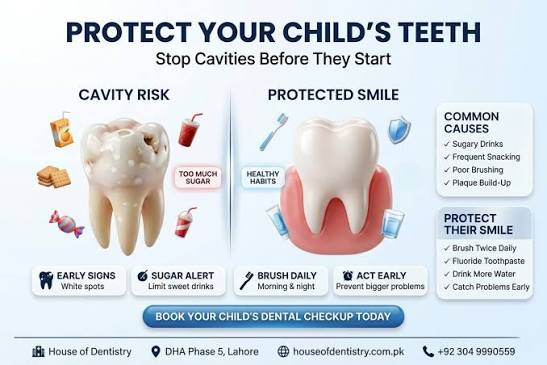
Set a house rule for drinks. Water between meals does a lot of quiet work. If your family likes juice, soda, sports drinks, or sweet coffee, keep them to meal times instead of slow sipping across the day.
Tighten the bedtime routine. Brush with fluoride toothpaste every night, and help younger children instead of just reminding them. If evenings are chaotic, move brushing earlier, right after the last snack, so it actually happens.
Book preventive visits before there is a problem. One appointment can reveal patterns you may not see at home, from grinding to weak enamel to hidden plaque buildup. A generic search for a dentist may get you started, but ongoing care with a family focused practice usually makes routines easier to maintain.
Cavities are common, and they do not mean you have failed. Most families are dealing with the same mix of busy schedules, tired evenings, and convenient snacks. Once you spot the patterns, you can change them without turning your home upside down. If your household has been stuck in the cycle of repeat cavities, schedule a visit with a family dentist and get a plan that fits real life.