Gamification Strategies That Increase Player Engagement
Surprising fact: apps that layer game elements can see up to a 40% lift in repeat use within weeks.
In this guide you will learn what “player engagement” means for your product: repeat visits, completion, progression, retention, and advocacy. You will see why a design-first approach wins. Treat game design as a system built on motivation, progress, feedback, and recognition rather than a set of cosmetic badges.
You will get practical best practices: pick mechanics that reinforce desired behavior, measure results, and iterate. Examples from Duolingo, Fitbit, and LinkedIn will show how mechanics map to goals. High-stakes cases like iGaming highlight KPI and compliance needs.
Throughout, think of players as any user across apps, loyalty programs, learning, fitness, or commerce. This section sets the stage for psychology, mechanics, onboarding, social systems, rewards, personalization, tech stack, and measurement.
Why Gamification Is a 2026 Must-Have for Engagement and Retention
Market momentum has pushed interactive design into core product planning. Mordor Intelligence projects the global gamification market will hit $92.5B by 2030 with about a 26% CAGR from 2025 to 2030, says Gamingstreet.com. That growth, plus smartphone-first habits and AI-driven personalization, makes this a strategic capability rather than an experiment.
Market signals and user expectations
Smartphone adoption and real-time interfaces raise baseline expectations for how users interact with apps. You now compete on both usefulness and moment-to-moment delight.
Why your customers and brand care
Leaders invest because aligned mechanics deliver measurable benefits: stronger engagement loops, higher loyalty, and more durable retention. But Millennials and Gen Z expect authenticity. They will reject noisy or manipulative implementations that harm your brand.
- Anchor decisions to clear goals, not gimmicks.
- Map mechanics to the customer journey and segments.
- Measure, iterate, and tie results to retention and loyalty metrics.
What It Really Means (and What It Doesn’t)
Think of this approach as using playful feedback and rewards to guide real actions. You should view it as purposeful product design, not just decoration. Clear goals and measurable outcomes separate effective work from noise.
Definition
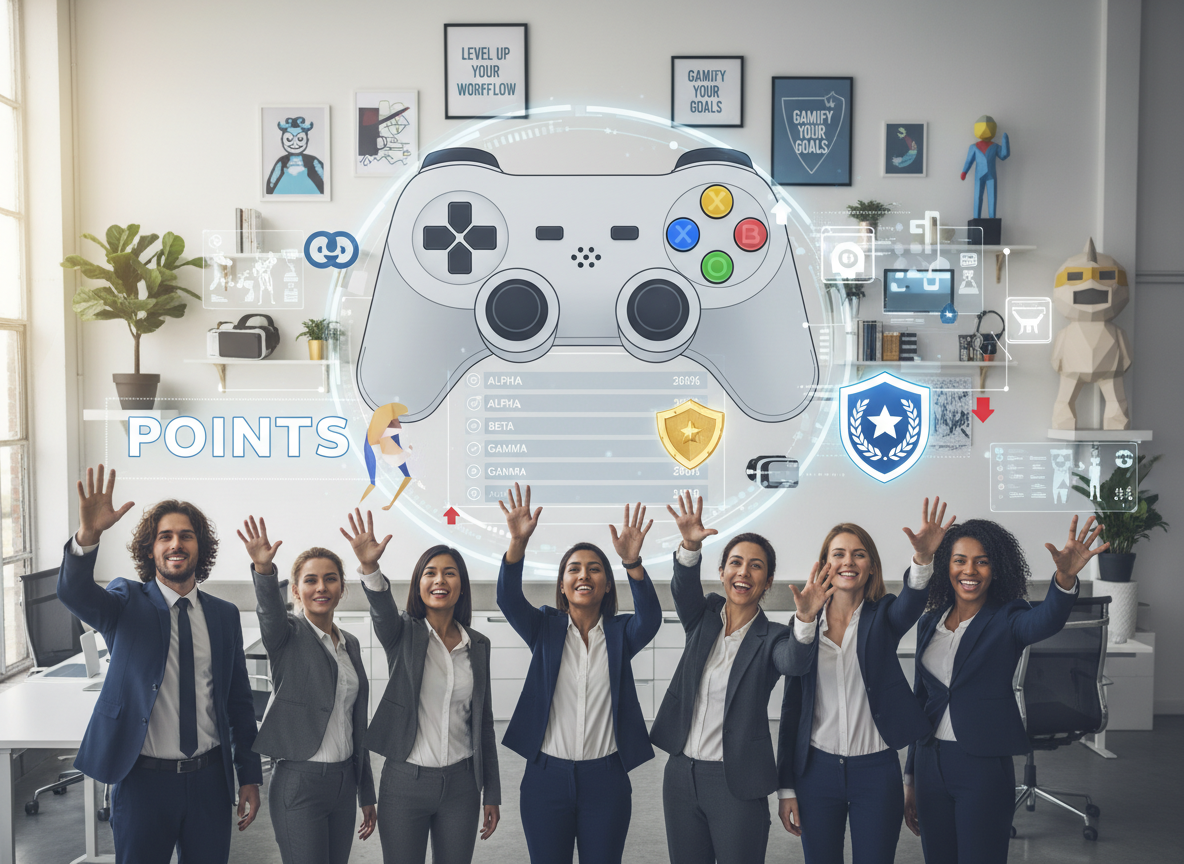
You define it as applying game elements—points, badges, levels, and challenges—in non-game contexts to motivate repeat behavior. A good implementation ties each element to a specific user action and a clear outcome.
Origins and evolution
The idea is older than mobile. Early loyalty systems like S&H Green Stamps (1896) and Scout badges (1908) used simple rewards and recognition. The term itself was coined by Nick Pelling in 2002. Cloud platforms such as Bunchball (2005) moved these techniques into modern apps.
Where brands go wrong
Many brands add icons and confetti without a behavior model. This “skin” approach fails because arbitrary badges and points don’t map to meaningful tasks and clutter the UI.
- Define the user action you want.
- Define the reward or feedback delivered.
- Define a clear progress marker.
- Define how you will measure success.
This sets the stage for later sections, where you’ll learn how to pick mechanics by lifecycle stage and by segment.
The Psychology Behind Player Engagement: Motivation, Progress, and Reward Loops
People return to products when they feel progress, purpose, and occasional delight. Design should make those drivers visible and predictable so each session delivers a small win.
Balancing intrinsic and extrinsic motivation
You should blend intrinsic motivators—mastery, autonomy, and purpose—with extrinsic rewards like points or tiers. Use perks sparingly so internal drives sustain long-term engagement.
Progression and mastery
Levels, milestones, and clear achievements convert big goals into short, winnable steps. Small wins create momentum and a stronger sense of competence.
Variable rewards and anticipation
Variable rewards raise curiosity and return rates when outcomes feel possible and bounded. Avoid randomness that feels unfair or stressful; predictability supports healthy habits.
Status and recognition
Visible recognition—tiers, meaningful titles, and public badges—creates social proof. That status signals value to others and nudges repeat behavior.
- What action do you want next? Pair it with immediate feedback.
- Break long goals into milestones to show progress.
- Use variable rewards carefully to build anticipation.
- Make recognition meaningful and shareable to reinforce status.
Gamification Mechanics That Drive Engagement (Points, Badges, Levels, and More)
Effective mechanics turn vague intentions into small, repeatable actions. Use each tool with a clear goal: frequency, completion, exploration, reactivation, or social participation. Below is a practical inventory and design advice you can apply now.
Points systems that reinforce the actions you actually want
Use points to reward high-value behaviors, such as completing onboarding, contributing content, or using core features. Keep the currency simple and tied to measurable outcomes.
Badges and achievements that feel meaningful, not generic
Award badges for identity, mastery, or rare behaviors. Make each achievement visible in profiles so badges signal value, not noise.
Progress bars, checklists, and profile-completeness patterns
Progress bars reduce uncertainty and leverage completion bias. Checklists turn large tasks into short wins that nudge users forward.
Streaks, daily missions, and habit-building challenges
Design streaks to encourage healthy routines. Use time-limited missions to create momentum, but add guardrails to prevent pressure or burnout.
Leaderboards and friendly competition
Keep leaderboards fair by using event windows, tiered groups, and non-pay metrics. Friendly competition boosts social participation without undermining trust.
- Points: frequency and repeat use
- Badges: mastery and identity
- Progress: completion and clarity
- Challenges: exploration and reactivation
- Leaderboards: social participation and competition
Gamification Strategies That Increase Player Engagement Across the Customer Journey
Map mechanics to each phase of the customer lifecycle so interaction feels useful, not random. A clear journey view helps you choose the right mix of tools for discovery, activation, retention, and advocacy.
Attraction
Turn passive browsing into action with low-friction entry points. Use brief quizzes, “try one step” missions, or one-click trials to prompt an immediate response.
Onboarding
Deliver quick wins. Show visible progress bars, instant feedback, and small rewards so new customers see value within minutes.
Engagement
Keep users returning with recurring challenges, timely feedback, and limited-time events. Leaderboards and milestone prompts create reasoned interaction without overwhelming users.
Retention
Build loyalty through tiered rewards, milestone celebrations, and community experiences that foster belonging beyond transactions. Reward meaningful contributions to strengthen long-term ties.
- Match mechanics to lifecycle stage.
- Make first sessions quick and clear.
- Use events and feedback to sustain activity.
- Design loyalty around recognition and community.
Onboarding That Hooks: First-Session Rewards Without Feeling Manipulative
A strong first session turns curiosity into commitment by giving users a clear, small win fast.
Use micro-rewards for meaningful early actions: account creation, first saved item, first lesson, or first purchase. Keep rewards proportional and transparent so the incentive guides choices instead of pressuring them.
Guided discovery with checklists
Show a short checklist that highlights platform value quickly. Example: “Complete 3 steps to unlock your dashboard.” Break tasks into tiny actions so progress is visible in the first session.
- Reinforce only high-value first actions with micro-rewards.
- Make incentives clear and time-limited, not coercive.
- Visible progress reduces friction and boosts activation.
- Write copy that makes rewards feel like recognition, not a slot-machine pull.
Connect onboarding outputs to activation rate, time-to-first-value, and completion of key setup steps. For deeper reading, include contextual outlinks to UX onboarding research to validate your approach and refine the strategy.
Challenge Design That Keeps Users in the “Flow Zone”
Well-designed challenges keep users focused by matching effort to ability in a measurable way.
Matching difficulty to skill
Define the flow zone in practical terms: tasks should stretch but not overwhelm. You want a clear sense of progress after each action.
Tier missions from beginner to advanced so users advance naturally. Let preferences guide which path a user sees first.
Adaptive missions and real-time signals
Use behavioral signals—frequency, completion rate, and drop-off points—to tune difficulty and reward value. AI-driven personalization can adjust missions in real time.
These systems improve performance by reducing early churn and boosting completion rates.
Time-based vs. evergreen missions
Time-based events (weekend sprints, seasonal series) drive short bursts of activity. Evergreen missions (mastery paths, onboarding flows) support steady progression.
Rotate content, cap notifications, and build short rest periods to avoid fatigue and keep challenges fresh.
- Keep challenges matched to skill and measurable goals.
- Tier tasks and use adaptive systems for real-time tuning.
- Balance time-limited events with always-on missions to lift completion and return frequency.
Social Engagement Systems: Community, Competition, and Connection
Social features turn lone routines into shared goals, giving users reasons to return together.
Well-designed social systems add accountability, visible recognition, and shared purpose. These elements make actions feel bigger than a single session and help create lasting bonds.
Event-based leaderboards that feel timely and relevant
Tie leaderboards to short events—weekend sprints or seasonal challenges—so rankings reset and feel fair.
Event-based leaderboards extend session length without creating an unscalable, permanent wall. They promote healthy competition and boost community activity around focused moments.
Collaborative missions and team challenges that build belonging
Offer team goals, shared milestones, or guild-style tasks to reduce zero-sum rivalry.
Collaborative missions foster connection and help users support each other. Use tiered groups to match skill levels and preserve inclusivity.
Referral and sharing mechanics that reward advocacy (without spam)
Design referral loops that give clear, limited incentives for genuine invites. Require opt-in sharing and make rules transparent.
Let social media sharing feel natural—reward both the referrer and the new user. Include easy opt-outs and anti-abuse checks to protect trust.
- Segment leaderboards by tier or percentile to keep competition fair.
- Use team tasks to grow community and reduce toxic rivalry.
- Track invites, referred activation, community participation, and retention lift.
When you link social design to metrics and credible policies—privacy, anti-abuse, and referral terms—you create a sustainable loop that improves interaction and long-term connection.
Rewards, Recognition, and Loyalty Programs That Actually Increase Retention
You should design loyalty systems to reward behavior tied to long-term customer value, not short-term discounts. Clear tiers, public recognition, and milestone celebrations build emotional ties and reduce churn.
Tiered loyalty rewards that align with long-term value
Build tiers around frequency, consistency, and contribution. Use metrics like repeat visits, referral actions, and meaningful activity to set thresholds.
Give each tier differentiated access—exclusive content, early features, or non-monetary perks—so customers see progression as value, not a coupon train.
Celebrations and milestone moments that create emotional connection
Mark anniversaries, streak completions, and big milestones with small, shareable moments. Public recognition and private notes both work when timed and sincere.
Designing incentives to support brand identity and user experience
Choose rewards that fit your brand: access, utility, and exclusivity often outperform simple price cuts. Blend spend-based and engagement-based benefits to protect margin and trust.
- Match tiers to lifetime behavior, not one-off spend.
- Use milestone celebrations to create lasting memories.
- Favor recognition and access over routine discounts to avoid promotional dilution.
Be risk-aware: model margin impact before launch and review performance regularly. For practical playbooks, consult loyalty program best practices from industry research and case studies.
Personalization: The Difference Between Generic Gamification and High-Performing Systems
When you match missions to real behavior, the experience stops feeling like an add-on and starts feeling essential.
Generic missions fail because they ignore preferences and lifecycle stage. If a task feels irrelevant, users skip it and friction rises. Relevance fixes that: tailored missions raise uptake, completion, session length, and lower churn.
Segmenting by behavior and lifecycle
Use simple inputs you can access now to tailor offers. Start with behavioral frequency, feature usage, and recency. Add skill level and purchase patterns as you mature.
- Behavior frequency
- Feature usage
- Recency, skill level, purchase patterns
Personalized mission examples and an industry cue
Give casual users short, low-risk tasks. Give advanced users mastery challenges. Give time-poor users micro-missions that fit short sessions.
In sportsbook contexts, match missions to favorite sports, typical stake size, and risk tolerance so goals feel achievable rather than punitive.
AI and adaptive rules can tune offers in real time. That drives measurable performance gains and provides the insights you need to refine your systems.
Next, you’ll need a tech stack that supports triggers, a rules engine, and real-time delivery to make this personalization work at scale.
Choosing the Right Platform and Tech Stack for Gamified Experiences
Choose a platform that unifies event tracking, mission logic, and reward delivery so your features feel reliable and immediate.
Data-rich infrastructure
Non-negotiable systems include event tracking, segmentation inputs, a rules engine, real-time triggers, and fast reward fulfillment. These pieces must share a single truth source so streaks, leaderboards, and grants never lag.
Cross-platform progression
Users expect their progress and achievements to follow them between mobile and desktop. Choose a platform that syncs state, avoids duplicate accounts, and preserves streaks across sessions.
UX integration
Embed mission panels, subtle progress indicators, and onboarding prompts into the journey. Avoid intrusive pop-ups that break flow; let features feel native to your product’s design.
- Operational needs: scale during events, data accuracy, and anti-abuse guardrails.
- Performance outcome: reliable systems build trust and lift consistent interaction.
- Evaluation tip: review vendor docs on rules engines, analytics, and UX best practices when you compare solutions.
Measuring What Matters: Engagement Metrics and KPI Alignment
Measurement separates fun features from business impact by tying each design choice to a clear KPI. You must pick a small set of metrics and report changes against controls so you know what actually moves the business.
Core metrics to track
Focus on session length, visit frequency, D1/D7/D30 retention, churn, and reactivation of dormant users. These metrics show whether mechanics produce sustained customer behavior or just short spikes.
Revenue-adjacent metrics
Track ARPU, CLV, conversion rate, and cross-sell behavior. Operators — especially in iGaming — prioritize these numbers to justify investment and measure margin impact.
A/B testing and iteration
Test one mechanic change at a time: reward value, mission difficulty, or leaderboard window. Use randomized control groups to avoid attribution bias and combine analytics with qualitative feedback for practical insights.
- Map each metric to a customer goal and loyalty outcome.
- Compare against controls to isolate incremental value.
- Iterate rapidly and measure both short-term lifts and long-term retention.
Real-World Examples You Can Model
Real-world cases reveal which mechanics map to specific user motives and outcomes. Below are three clear examples you can inspect to adapt lessons for your product.
Duolingo: simple loops and emotional hooks
Duolingo blends XP, streak protection, weekly leagues, and a mascot-driven tone. XP rewards measurable progress and nudges short sessions. Streaks tap into loss aversion so users return to keep a streak alive.
Fitbit: visible progress and social accountability
Fitbit turns health data into clear dashboards. Progress bars and badges make invisible change tangible. Friend competitions and leaderboards add accountability and friendly rivalry.
LinkedIn: subtle completion and professional recognition
LinkedIn uses profile completeness meters and endorsement loops to drive return visits. Recognition moments—endorsements or profile views—reinforce professional identity without heavy gamey cues.
- Make progress visible.
- Keep goals bite-sized.
- Use social proof carefully.
- Celebrate milestones at the right moments.
Each example fits its audience. Visit official product pages and case studies to see these mechanics in context before you apply them to your own experiences.
Industry Use Cases for Gamification Beyond “Gaming”
Many sectors now borrow game design to boost learning, loyalty, and workplace skill. Below are concrete examples you can adapt for your product and customer journey.
Education and e-learning
Use missions, points, and mastery loops to break courses into bite-sized wins. This approach raises completion and course consistency.
Retail and e-commerce
Tiered loyalty programs and interactive promos—spins, scratch cards, treasure hunts—turn browsing into repeat purchases. Tie rewards to meaningful offers to protect margin.
HR and workplace learning
Simulations, milestone recognition, and team challenges help skill development and boost overall performance. Use leaderboards for short events, not perpetual ranking.
Fitness and healthcare
Adherence programs, streaks, and clear progress visualization support habit building and better outcomes. Combine private notes with public badges for balanced recognition.
- Map each use case to attraction, onboarding, engagement, and retention steps.
- Reference platforms like Duolingo, Fitbit, and LinkedIn for practical models.
- Keep content relevant to the customer role and the journey you own.
Common Pitfalls and Risks to Avoid (Especially in Regulated Spaces)
Small design decisions can create outsized legal and financial risk if you skip a compliance review. Plan compliance checkpoints into product sprints so regulatory exposure is caught early, not at launch.
Promotional dilution
If your rewards mirror standard discounts, you erode margin without adding real loyalty. Treat each grant as an experiment: measure incremental lift versus cost and stop offers that only shift timing of purchases.
Complexity barriers
Confusing rules, unclear scoring, or harsh resets repel casual users. Keep missions and systems simple, test the language, and publish clear terms so people know what actions lead to value.
Regulatory exposure and responsible design
Leaderboards, prize mechanics, and chance-like features may trigger jurisdictional rules. Build a compliance review into your roadmap and avoid mechanics that push unhealthy loops.
- Prefer transparent rules and fair scoring to preserve trust.
- Include safety defaults (limits, cool-downs, opt-outs) to prevent harm.
- Watch short-term spikes for hidden churn or brand damage.
Future-Proofing Your Approach With AI and Immersive Tech
Real-time personalization and mixed-reality features let you adapt challenges to a user’s moment and mood. Use these tools to make missions feel relevant, smooth, and measurable rather than flashy.
AI-driven personalization and adaptive feedback in real time
AI predicts which mission a user will accept, adjusts difficulty, and delivers instant feedback. Operationally, that means models score candidate missions, an engine picks the best fit, and the UI shows tailored prompts.
This reduces churn by matching tasks to preferences and by pacing challenges to avoid boredom or frustration. Measure lift with cohort retention, completion rate, and time-to-next-session.
AR/VR spatial experiences that bring missions and rewards into the real world
AR and VR enable spatial missions, hands-on training simulations, and physical reward discovery. Think scavenger hunts, workplace skill drills, or guided tours with localized rewards.
Keep use cases practical: add clear KPIs, short sessions, and cross-platform progression so progress follows users between devices.
Social trends: guilds, collaborative play, and event leaderboards
Guild-style groups and collaborative play build community and shared goals. Use event-based leaderboards to avoid permanent hierarchies and to drive bursts of social activity.
- Predict and adapt missions with lightweight ML models.
- Deploy AR/VR where it maps to real value, not novelty.
- Design social systems around short events and shared rewards.
Future-proofing means modular systems and a flexible platform so you can add new mechanics without rebuilding the core. If a trend doesn’t move retention or repeat use, de-prioritize it and iterate on what does.
Make Your Gamification Strategy Stick With Clear Goals and Continuous Optimization
Start with a single, observable goal and let design choices follow that metric. A goal-driven system beats isolated mechanics every time; treat gamification as a product-level strategy that maps to business outcomes.
Use a simple checklist: define objectives, map journey stages, pick clear mechanics, set guardrails, instrument analytics, and run fast tests. Personalization multiplies results—segment customers, tailor missions, and keep offers relevant so participation grows.
Keep rules simple and explainable to build trust and reduce drop-off. Measured iteration ties work to loyalty and better retention. As AI and social systems evolve, your best edge is disciplined optimization driven by data and user feedback.