

What Sales Automation Means for Fast-Growing Teams
Key Takeaways
- Sales automation boosts productivity by streamlining routine tasks.
- Adoption of automation fast-tracks sales cycles and drives more revenue.
- It optimizes lead handling and increases conversion rates.
- Automation ensures better accuracy and process consistency.
- Teams can deliver personalized interactions at scale with automation.
- Morale and job satisfaction improve as administrative burdens decrease.
Table of Contents
- Boosting Productivity and Saving Time
- Accelerating Sales Cycles and Increasing Revenue
- Enhancing Lead Management and Conversion
- Ensuring Accuracy and Consistency
- Delivering Personalized Customer Experiences
- Improving Sales Team Satisfaction
- Implementing Sales Automation Effectively
- Conclusion
For fast-growing teams in today’s high-stakes business landscape, efficiency and strategic focus are more important than ever. The increasing adoption of sales automation has become instrumental in streamlining operations and empowering teams to center their efforts on activities that generate real value. By leveraging digital tools and modern workflows, teams can minimize manual work, address process gaps, and consistently achieve bigger objectives in less time.
Sales automation transforms repetitive, time-consuming tasks into seamless, automated processes. This allows teams to operate at peak productivity, delivering stronger results and better customer experiences at scale. The impact of this shift can be seen in everything from shorter sales cycles to improved lead engagement and higher morale among sales professionals.
Organizations that effectively embrace automation can allocate resources more intelligently, increase their overall agility, and maintain a competitive edge in a constantly evolving market. These benefits set the stage for sustainable long-term growth and elevated revenue performance.
The strategic integration of automation technologies continues to redefine what top-performing sales teams accomplish each day. By automating critical workflows and freeing up time for more complex and creative work, sales professionals can focus on driving success for themselves and their organizations.
Boosting Productivity and Saving Time
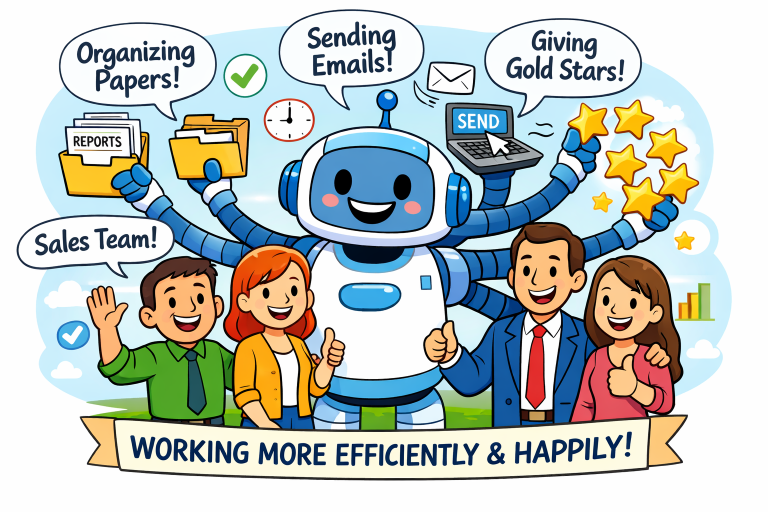
One of the biggest advantages of sales automation is its ability to reclaim wasted hours. By delegating tasks like updating CRM records, sending calendar invites, and compiling weekly reports to automated systems, sales reps can devote the bulk of their day to relationship-building and closing business. Research from McKinsey shows that automation has the potential to save individual workers several hours weekly, making the difference between missing and exceeding sales targets.
Accelerating Sales Cycles and Increasing Revenue
A speedy sales process benefits both the business and its customers. Automated lead routing, instant email follow-ups, and scheduled reminders eliminate lags that traditionally slow deals. Teams adopting these solutions report closing deals faster and at a higher rate. Integration with artificial intelligence (AI) can also uncover hidden opportunities and optimize customer outreach, which can further increase sales ROI by up to 20%, according to industry benchmarks.
Enhancing Lead Management and Conversion
Fast-growing sales organizations often struggle to sift through high lead volumes. Automating lead capture, prioritization, and nurturing ensures that top prospects are quickly identified and never slip through the cracks. Automated workflows deliver personalized content when leads are most engaged, resulting in higher conversion rates. Studies consistently show a strong correlation between lead automation and improved pipeline performance, with automation users reporting up to 77% more conversions.
Ensuring Accuracy and Consistency
Human error is a common challenge in manual sales processes, affecting data integrity and forecasting. Automated tools perform repetitive data tasks with precision, making sure that every contact detail and opportunity stage is tracked properly. This consistency not only reduces costly mistakes but also makes sales data highly reliable, aiding strategic reviews and future planning. As noted by Forbes, automation-driven accuracy is essential for building trust and transparency within and outside the team.
Delivering Personalized Customer Experiences
Modern buyers demand tailored engagement along their journey. Automation empowers sales teams to deliver personalized outreach, such as timely recommendations and custom follow-ups, at every touchpoint, regardless of lead volume. AI-infused systems can survey a customer’s engagement history and proactively suggest interventions to prevent churn. The result is greater customer satisfaction and stronger loyalty, both foundational to long-term growth.
Improving Sales Team Satisfaction
Few things drive down employee morale like the monotony of repetitive admin tasks. By automating the busywork, companies allow their sales professionals to work on higher-impact areas, such as creative selling and strategy. Happier reps tend to stay longer, contribute more, and reinforce a positive culture. In fact, surveys have found that 88% of teams using automation tools report higher on-the-job satisfaction, with lower stress and better work-life balance.
Implementing Sales Automation Effectively
Success with sales automation depends on deliberate implementation. Teams should begin by mapping workflows and identifying high-impact processes for automation. Selecting tools that integrate with current tech stacks and providing thorough user training are critical steps. Regularly reviewing performance metrics and feedback helps refine automations for maximum benefit. With these practices, even companies new to automation can enjoy rapid gains and smooth transitions.
Conclusion
Sales automation changes the game for fast-growing teams by improving productivity, speeding up deal cycles, boosting lead conversion, and raising both data integrity and job satisfaction. When executed with care and purpose, automation drives both immediate and lasting growth, helping sales leaders thrive in an increasingly digital world. By continuing to optimize, experiment, and learn, organizations position themselves well for ongoing competitive advantage.