Guide to Automated Ice Cream Kiosks for Food Truck Operators
The global ice cream market continues to surge, projected to reach billions in revenue as consumer demand for frozen treats shows no signs of slowing. For food truck operators, this represents a golden opportunity — but also a real operational challenge. Peak hours bring long lines, overwhelmed staff, and frustrated customers who may simply walk away before placing an order.
Automated ice cream kiosks are changing that equation entirely. These self-service machines handle dispensing, payment processing, and even flavor customization without requiring constant staff attention, allowing food truck operators to serve more customers faster while keeping labor costs in check. Whether you’re parked at a summer festival, a busy street corner, or a corporate event, the right automated kiosk can transform your operation from a bottleneck into a smooth, high-volume service point.
This guide walks you through everything you need to know — from understanding what automated ice cream kiosks actually are, to comparing machine types suited for mobile setups, to practical steps for choosing and implementing the best solution for your food truck business. If you’re looking to stand out from the competition and maximize revenue during your busiest hours, this is where to start.
What Are Automated Ice Cream Kiosks? An Overview for Food Trucks
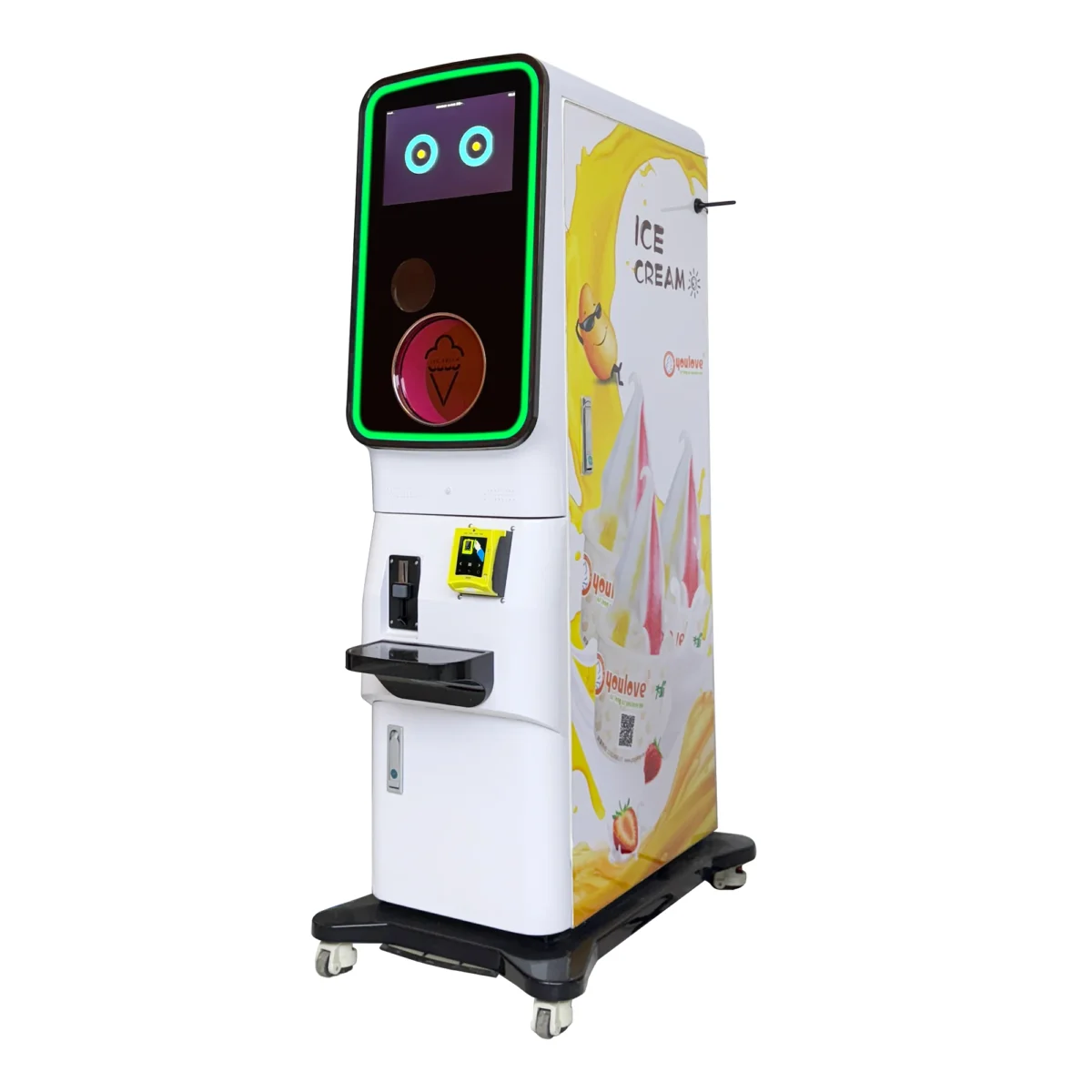
Automated ice cream kiosks are self-service machines that dispense frozen treats with minimal human involvement. Unlike traditional setups where a staff member scoops, swirls, or assembles each order, these units handle the entire process — from flavor selection to dispensing — through built-in automation. For food truck operators, that distinction matters enormously when lines are long and every second counts.
At their core, these kiosks combine three essential systems. The dispensing mechanism controls how ice cream is portioned and delivered, whether that’s a soft-serve nozzle, a pre-packaged cup dispenser, or a robotic scooping arm. The payment system processes transactions via card, contactless tap, or mobile wallet, eliminating the need for a cashier. The refrigeration unit maintains consistent product temperature regardless of outdoor conditions — a critical feature for mobile operations exposed to heat and direct sunlight.
Integrating one of these machines into a food truck setup typically involves securing it within or adjacent to the truck’s service window, connecting it to the vehicle’s power supply or a dedicated generator, and configuring the payment software to sync with your existing point-of-sale system. Many modern kiosks are compact enough to fit within tight truck layouts without sacrificing output capacity, making them a genuinely practical addition rather than a logistical headache. The result is a streamlined service point that keeps customers moving and frees your crew to focus on other tasks.
Key Benefits of Automated Ice Cream Kiosks for Food Truck Operators
When a line stretches down the block and your crew is already stretched thin, every minute of service delay costs you real revenue. Automated ice cream kiosks directly solve that problem by processing orders and dispensing product in seconds, without requiring a staff member at every transaction. During peak hours — think summer festivals, lunch rushes, or weekend markets — a single kiosk can handle the output equivalent of one or two additional employees, keeping the line moving and customers satisfied rather than walking away.
Beyond speed, these machines offer a genuinely distinctive experience that draws attention on its own. A touchscreen interface, a robotic scooping arm, or a sleek self-serve station turns a routine ice cream purchase into something worth photographing and sharing. That kind of organic social media visibility is marketing you don’t have to pay for, and it consistently pulls curious customers toward your truck over competitors offering a standard counter experience.
The financial case is equally compelling. Labor represents one of the largest operating costs for food truck businesses, and automating the dispensing and payment process reduces your dependency on hourly staff without reducing output. Some kiosk models are capable of operating with minimal supervision during slower periods, extending your effective service window well beyond what a small crew could manage alone. Additional advantages include consistent portion control that reduces product waste, integrated sales data that helps you track bestselling flavors and peak transaction times, and a contactless payment experience that meets modern customer expectations. Together, these benefits don’t just improve daily operations — they position your food truck as a forward-thinking business built for high-volume, high-satisfaction service.
Types of Automated Ice Cream Machines: Choosing the Right Fit
Not every automated ice cream machine suits every food truck operation. The right choice depends on your menu focus, expected customer volume, available space, and how much staff involvement you want during service. Here’s how the main categories break down for mobile setups.
Soft Serve Ice Cream Machines for Creamy Consistency
Soft serve machines are the most common choice for food trucks, and for good reason. They produce a continuous supply of smooth, creamy product at a consistent texture, dispensing directly into cones or cups in seconds. Automated versions handle portioning automatically, reducing waste and eliminating the learning curve for new staff. They work especially well for operators who want to offer flavor customization — many models support two or three flavor inputs with a twist option — without slowing down service. The main trade-off is that soft serve machines require regular cleaning cycles, which need to be factored into your daily schedule.
High Capacity Ice Cream Makers for Busy Operations
When you’re parked at a large festival or a high-traffic event, output volume becomes the priority. High-capacity machines are engineered to run continuously for extended periods without overheating or dropping product quality. They typically feature larger mix hoppers and faster freezing cycles, meaning you spend less time refilling and more time serving. Manufacturers like Smartool have developed ice maker solutions specifically designed for demanding mobile environments, where consistent output and reliable refrigeration performance are non-negotiable. These units tend to be heavier and require a more robust power supply, so confirming your truck’s electrical capacity before purchasing is essential.
Vending Ice Cream Machines for Self-Service Convenience
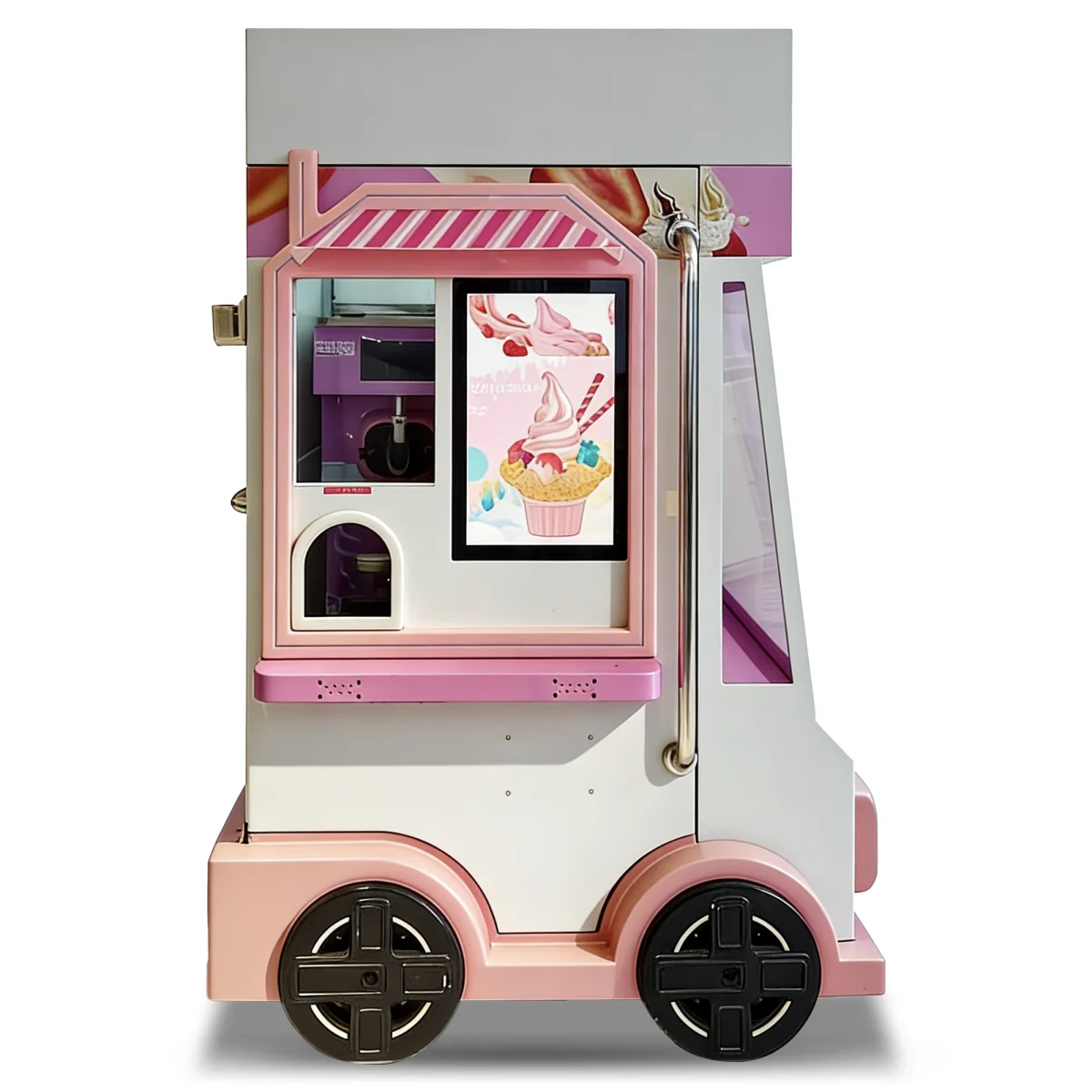
Standalone vending units take automation a step further by allowing customers to complete the entire transaction independently — selecting a product, paying, and retrieving their order without any staff interaction. These machines stock pre-packaged items like novelty bars, cups, or pouches and are ideal for operators who want to extend service availability during low-staffing periods. They’re particularly effective when positioned outside or adjacent to your truck, capturing foot traffic even when your crew is occupied with other tasks.
Self-Service Ice Cream Machines for Interactive Experiences
Touchscreen-enabled self-service machines go beyond simple dispensing by letting customers actively build their order — choosing flavors, toppings, and portion sizes through an intuitive interface. That level of interactivity creates a memorable experience that encourages repeat visits and social sharing. These units work best at events where dwell time is higher and customers are in an exploratory mood. The interactive element also reduces order errors since customers confirm their selections directly, cutting down on remakes and product loss.
Step-by-Step Guide to Choosing and Implementing an Automated Kiosk
Getting the right automated kiosk into your food truck operation starts long before you make a purchase. The first step is an honest assessment of your truck’s physical constraints — measure your available service area carefully, accounting for customer-facing access, ventilation clearance, and how the machine will affect crew movement during busy service. At the same time, audit your power supply. Many high-output machines require dedicated 220V circuits, and running undersized power to a refrigeration unit will cause performance issues and potential equipment damage.
With those baselines established, match machine type to your actual volume needs rather than your ideal scenario. If you primarily work smaller markets and private events, a compact soft-serve or self-service unit will serve you better than an oversized high-capacity machine that strains your generator and dominates your footprint. For operators running large festivals regularly, prioritize output capacity and continuous-run capability above all else.
Portability and durability deserve equal weight in your evaluation. Look for machines with reinforced housing, vibration-resistant components, and secure mounting options designed for mobile environments — road vibration and temperature swings are hard on equipment not built for transit. Before your first live service, run a full installation test: connect the unit, process several trial transactions, cycle through a complete cleaning sequence, and verify that payment software syncs correctly with your existing POS. Catching integration issues during testing rather than mid-service prevents costly disruptions and protects your customer experience from day one.
Maximizing Efficiency and Customer Attraction with Your Kiosk
A well-chosen kiosk only delivers its full value if it stays operational and visible. Establish a daily maintenance routine that includes cleaning cycles, mix hopper refills, and a quick check of payment system connectivity before each service shift. Most modern machines surface error codes through their display panels, so training yourself to recognize common alerts — low product warnings, temperature fluctuations, or connectivity drops — means you can resolve issues in minutes rather than losing an entire service window to unexpected downtime.
On the marketing side, your kiosk is a visual asset worth actively promoting. Post short videos of the machine in action on Instagram or TikTok before events — the dispensing animation and touchscreen interaction consistently generate strong engagement without any production budget. Pair that with a simple loyalty mechanic, such as a digital stamp card tied to your payment app, to convert first-time customers into regulars who specifically seek out your truck for the experience.
Placement within your setup has a direct impact on both throughput and foot traffic. Position the kiosk at the end of your service window so customers move naturally through the transaction without blocking incoming orders. If space allows, angling the machine slightly outward toward foot traffic — rather than flush against the truck wall — increases its visibility from a distance and draws in passersby who might not have stopped otherwise. Clear signage above the unit indicating accepted payment methods and available flavors removes hesitation and keeps the line flowing steadily.
Automate Your Food Truck for Faster, More Profitable Ice Cream Service
Automated ice cream kiosks represent a genuine leap forward for food truck operators who want to serve more customers, reduce labor dependency, and create a service experience that stands out in a crowded market. By handling dispensing, payment processing, and portion control without constant staff involvement, these machines directly address the two biggest pressure points in mobile food service: peak-hour bottlenecks and rising operational costs.
Choosing the right machine matters as much as choosing to automate at all. A soft-serve unit suits operators focused on speed and flavor variety, while a high-capacity machine powers through large-event demand without skipping a beat. Vending and self-service models extend your reach even further, turning your truck into a service point that can function effectively with minimal supervision. Following a structured implementation process — from space and power assessment through installation testing — ensures your kiosk performs from the first day of service rather than becoming an expensive source of disruption.
The food truck industry rewards operators who adapt quickly and serve consistently. Automated ice cream kiosks give you both. If you’re ready to reduce wait times, lower labor costs, and give customers a reason to seek out your truck specifically, now is the time to explore what these machines can do for your business. Start by evaluating your current setup against the criteria in this guide, and take the first step toward a faster, more profitable operation.